Weather conditions this week, Mogán, Gran Canaria
🌫️ Misty Morning
☀️ Sunny Days
🌡️ Temperature: 18°C (Night) / 24°C (Day)
🌘 Moon Phase: Waning Crescent
In mindful agriculture, we need to rethink our instinctive judgments about what is “good,” “bad,” and “ugly.” Often, we panic at the sight of insects or plant diseases, fearing they might harm our crops. This fear drives us to reach for remedies and poisons—sometimes unnecessarily. Yet, this approach is not sustainable, for it perpetuates a cycle of harm that affects not just the soil and nature but also ourselves.
Industrial farming operates on this very principle of fear. To ensure that fruits and vegetables remain untouched until they reach supermarket shelves, crops are treated with chemicals to deter organisms from consuming them. Producers cannot risk losing a single harvest. But this reliance on chemicals ultimately harms ecosystems, reducing biodiversity and depleting the soil’s natural resilience.
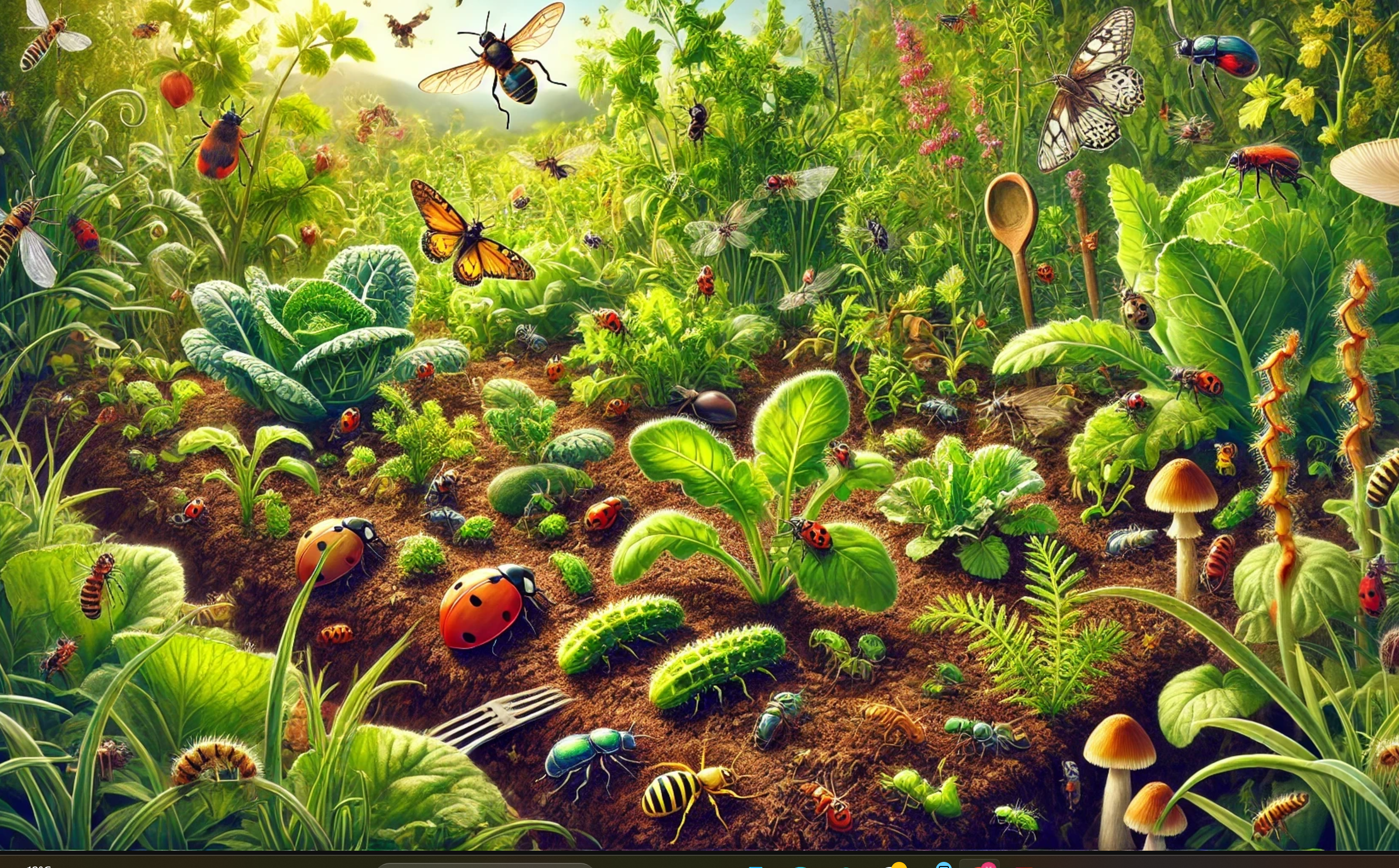
This week in our vegetable garden, life began to flourish. Insects and organisms surrounded our ripening plants, a sign of nature’s vibrancy. Instead of panicking and resorting to remedies, we paused to observe. As ecological farmers, we’ve learned to be more mindful and to embrace the complexity of our garden’s ecosystem.
For instance, ants are often seen as a nuisance. They have symbiotic relationships with aphids, treating them like livestock and protecting them from predators. Yet, today in the garden, I observed ants attacking a caterpillar, a pest that can harm vegetables. In this case, the ants played a beneficial role, showing us that even the “bad” can sometimes be good. Mindful observation reminds us to reconsider our assumptions and to work with nature rather than against it.
The Other Side of ‘Ugly’: Why Imperfection Tells a Story
Our instinctive judgment extends even to how we perceive fruits and vegetables. We’ve grown used to selecting the most pristine, spotless produce, often overlooking the fact that such perfection might mean they were never truly ripe or desirable to other organisms. Unripe fruits and vegetables, frequently harvested early to prevent damage, are less appealing because they haven’t yet developed their full properties. These are later ripened artificially in controlled environments.
In contrast, organically grown fruits and vegetables are left to ripen fully on the plant, making them more attractive to insects, birds, and other creatures. This interaction with nature often leaves behind scars—brown spots, irregular shapes, or blemishes. But these “imperfections” are a testament to their natural growth and ripeness. They are signs of popularity, not of inferiority.
When you choose these so-called “ugly” fruits and vegetables, you’ll discover flavors that are richer, more authentic, and far superior to their industrial counterparts. What’s more, these naturally grown crops often contain higher levels of nutrients and beneficial properties, making them better for your health. Sometimes, embracing the “ugly” is the most beautiful choice you can make.


You’re welcome Yineke! Here’s hoping you have a wonderful week! xox